In the world of ever-shrinking and powerful electronics, from smartphones to medical devices, lies a revolutionary manufacturing process: Surface Mount Technology (SMT). At the core of this process is the SMT machine, a technological marvel that has made the mass production of complex printed circuit boards (PCBs) possible. If you've ever wondered how those tiny components find their way onto your device's motherboard, you're in the right place.
This article will demystify what an SMT machine is, break down how it works, and explore the essential role of SMT assembly line equipment within a modern SMT line factory.
What is an SMT Machine?
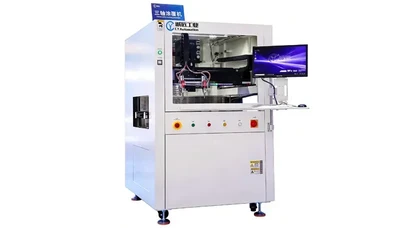
An SMT machine, commonly known as a "pick-and-place" machine, is an automated robotic device that precisely places surface-mount devices (SMDs) onto a printed circuit board (PCB). Unlike the older through-hole technology, where components have wire leads inserted into holes, SMDs are placed directly onto the surface of the board. This allows for smaller, faster, and more reliable electronic devices.
But an SMT machine is rarely a standalone unit. It is the most critical component in a suite of SMT assembly line equipment that forms a complete SMT production line. A typical SMT line factory integrates all these machines into a seamless, high-speed workflow.
The Core Components of an SMT Assembly Line
To fully understand how an SMT machine works, we need to see it in context. A complete SMT production line consists of several key pieces of equipment:
Solder Paste Printing Machine: This is the first station. It uses a stencil to apply solder paste (a sticky mixture of tiny solder balls and flux) onto the PCB's pads exactly where components will be placed.
SMT Machine (Pick-and-Place): The star of the show. An SMT pick and place machine picks up SMDs from reels or trays and places them at high speed and with incredible accuracy onto the solder paste-covered pads.
Reflow Oven: After placement, the PCB travels through a surface mount soldering oven. This is a precisely heated tunnel that melts the solder paste, permanently bonding the component leads to the PCB pads, creating both a mechanical and electrical connection.
SMT Inspection Machine: Quality control is vital. SMT inspection machines are used at various stages (after paste printing, after component placement) to catch defects early. These can be Automated Optical Inspection (AOI) systems or more advanced X-ray inspectors for checking hidden connections like BGAs.
How an SMT Machine Works: A Step-by-Step Breakdown
The operation of an SMT machine is a fascinating dance of precision engineering and speed. Here's a simplified breakdown of the process:
Step 1: The PCB is Loaded
The bare PCB, now with solder paste applied, is conveyed into the SMT machine.
Step 2: Component Feeding
The machine is fed components from various sources, such as reels, sticks, or trays, which are loaded into its feeder carriages. The machine's software knows exactly which feeder holds which component.
Step 3: Vision and Alignment
This is where the magic happens. The PCB has fiducial marks—small reference points that the machine's camera system uses to align the board perfectly. Simultaneously, a high-resolution camera on the placement head inspects each tiny component as it is picked up. It corrects for any misalignment in rotation or center before placement.
Step 4: High-Speed Pick and Place
The placement head, equipped with multiple nozzles, moves at blistering speeds. It picks components from the feeders and places them onto their pre-programmed positions on the PCB with micron-level accuracy. Modern high-speed SMT machine can place tens of thousands of components per hour.
Step 5: Output and Conveyance
Once all components are placed, the assembled PCB is carefully conveyed out of the SMT machine and sent directly to the reflow oven for soldering.
Why is the SMT Machine So Crucial in an SMT Line Factory?
The efficiency of an entire SMT line factory hinges on the performance of its SMT machines. They directly determine:
Production Speed: The placement rate is often the bottleneck in the SMT process.
Assembly Quality: Precision placement is essential for creating reliable solder joints in the reflow oven.
Flexibility: A modern SMT machine can be quickly reprogrammed to handle different PCBs, making low-volume, high-mix production feasible.
Yield: Accurate placement minimizes defects like tombstones (where a component stands on one end) or bridged connections, which are later caught by the SMT inspection machine.
Conclusion
The SMT machine is the undeniable workhorse of modern electronics manufacturing. By automating the precise placement of microscopic components, it enables the creation of the powerful, compact, and affordable devices we rely on every day. Understanding its function within the broader ecosystem of SMT assembly line equipment—from solder paste printers to reflow ovens and SMT inspection machine—is key to appreciating the engineering brilliance behind today's technology.


 Call us on:
  Email Us:
  Building 2, Xingye 1st Road, Fenghuang Community, Fuyong Street, Bao 'an District, Shenzhen, Guangdong, China.