Optimizing Soldering Quality with Advanced SMT Reflow Oven Machines
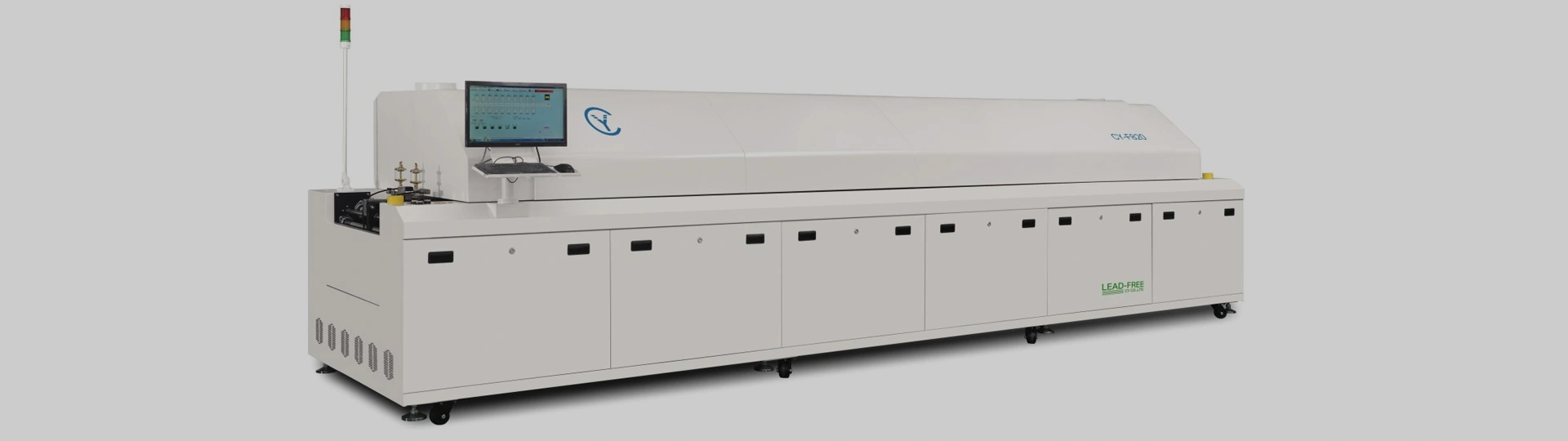
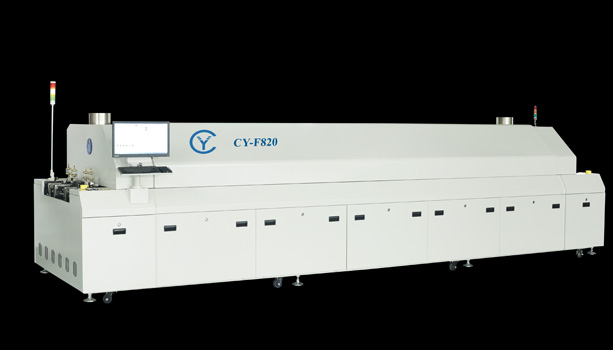
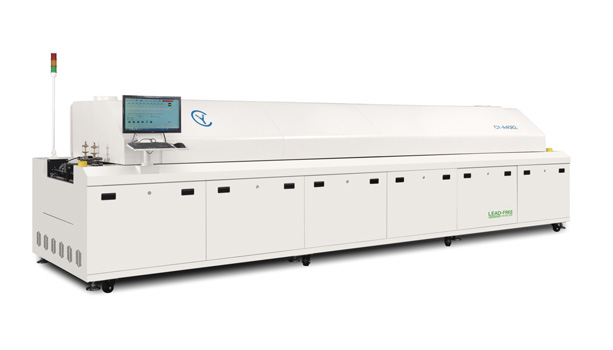
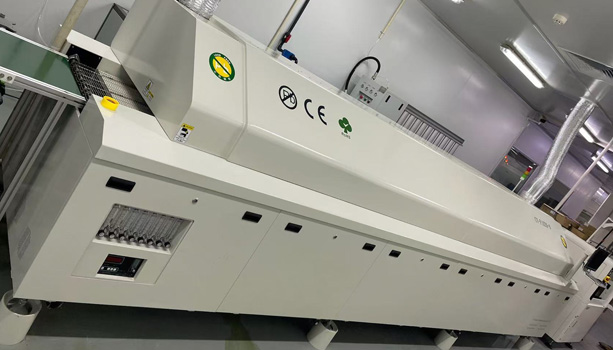
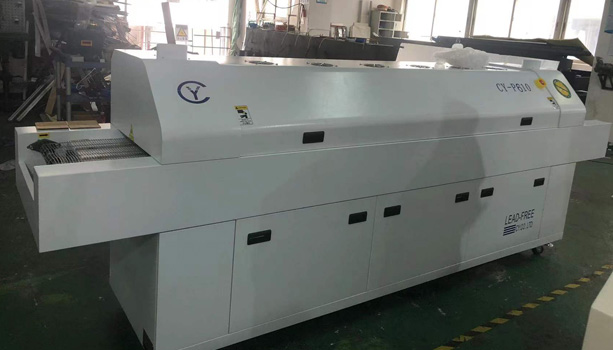
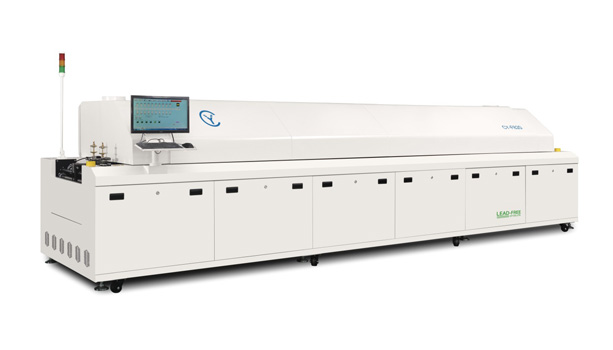
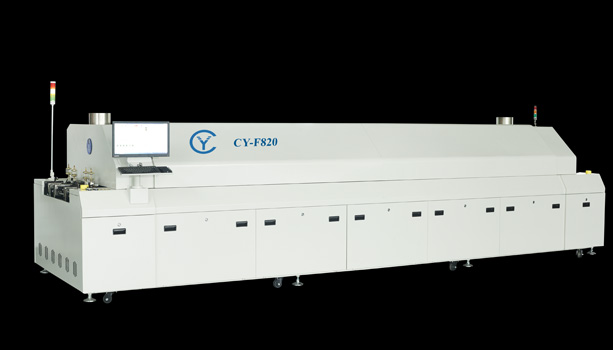
Advanced solder reflow oven systems elevate soldering precision through adaptive thermal profiling, ensuring optimal melt and solidification of solder paste for defect-free joints on complex PCB assemblies. Each reflow oven machine should be configured according to PCB size, solder paste, required thermal profile, throughput and atmosphere requirements. For lead-free SMT applications, a lead free hot air reflow oven can provide stable thermal distribution while meeting specific soldering requirements. As a professional reflow oven manufacturer and one of the leading SMT machine suppliers for SMT production lines, CY Industrial integrates intelligent zone control to eliminate cold spots, while nitrogen inertion reduces oxidation in fine-pitch and BGA components. Real-time sensors continuously monitor temperature deviations and automatically adjust heating elements to maintain IPC-7530 compliance. Combining convection and IR hybrid heating, each reflow soldering machine efficiently supports mixed-technology production, from lead-free to high-temperature alloys, making it an ideal reflow oven for PCB assembly in automotive, IoT, aerospace, and other high-reliability electronics industries. Energy-efficient designs further reduce power consumption by up to 30%, helping manufacturers achieve stable quality and sustainable high-speed SMT production. Ideal for automotive, IoT, and aerospace electronics, these ovens guarantee reliability in high-speed SMT lines, where consistent quality drives manufacturing success.
Key Features to Consider When Selecting an SMT Reflow Oven
Prioritize adaptive thermal profiling for precise control over temperature curves, ensuring compatibility with lead-free or mixed-alloy pastes.
Nitrogen inertion minimizes oxidation for high-reliability BGA and micro-BGA soldering.
Zone-independent heating (convection, IR, or hybrid) guarantees uniform heat distribution across large or dense PCBs. An SMT reflow oven should also provide stable conveyor control, effective cooling and accurate temperature monitoring.
Energy efficiency reduces operational costs, while real-time monitoring with data logging supports IPC-7530 compliance.
Scalable conveyor speeds (0.5–2m/min) balance throughput and quality.
Verify cooling rate control to prevent thermal stress, and prioritize ease of maintenance for uninterrupted production.
When evaluating reflow oven suppliers, look for these features—they are what make the reflow system ideal for automotive and 5G manufacturing, ensuring consistent, high-yield soldering in demanding SMT environments.

 Call us on:
  Email Us:
  Building 2, Xingye 1st Road, Fenghuang Community, Fuyong Street, Bao 'an District, Shenzhen, Guangdong, China.