For EMS factories, PCB assembly plants, and electronics manufacturers, a conformal coating process is not only a finishing step after SMT assembly. It directly affects product reliability, field failure risk, production efficiency, and coating material consumption. Choosing the right conformal coating machine requires more than comparing machine size or price. Buyers need to confirm coating method, PCB structure, material type, curing process, inspection requirements, and line integration.
Modern conformal coating equipment is used to apply a thin protective layer on PCBA surfaces, helping protect circuits from moisture, dust, chemicals, temperature changes, corrosion, and mechanical stress. For automotive electronics, medical devices, industrial controls, aerospace modules, LED lighting, consumer electronics, and IoT products, the coating solution should match both the product environment and the factory's production mode.
How a Conformal Coating Machine Supports PCB Reliability
A conformal coating machine applies protective materials such as acrylic, silicone, urethane, epoxy, or UV-curable coating onto selected areas or the whole PCB. The coating helps improve electrical insulation and reduce damage caused by humidity, contamination, chemical vapor, and vibration.
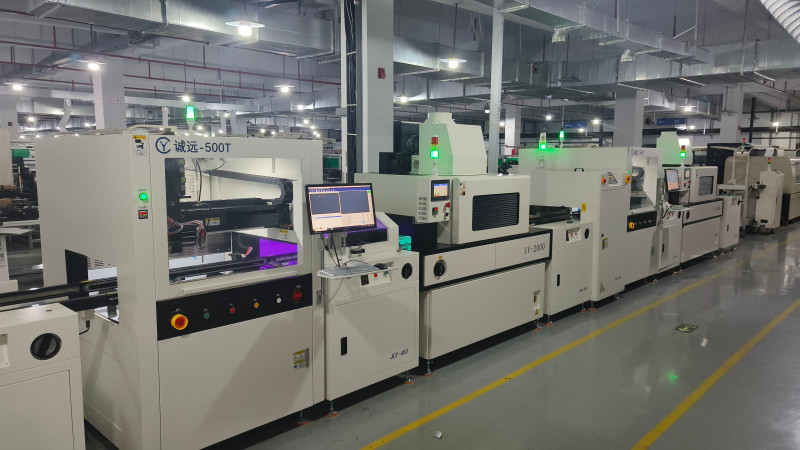
Manual coating may work for small batches, but it is difficult to maintain stable thickness, edge control, and repeatable coverage. For UV-curable materials, a uv curing oven can be integrated after coating and leveling to provide controlled curing. An automated conformal coating machine uses programmable paths, robotic movement, spray valves, jetting valves, needle dispensing, or curtain coating to improve consistency. For B2B buyers, automation is most valuable when the factory needs stable batch quality, lower rework, less masking labor, and traceable process control.
Choose Selective Conformal Coating Machine for Complex PCBA Layouts
A selective conformal coating machine is suitable when the PCB includes connectors, switches, sensors, heat sinks, test points, or keep-out zones that should not be coated. Three-axis systems use programmable X-Y-Z motion to apply coating only to required areas. They are useful for high-density boards, standard selective coating, dispensing, gasketing, sealing, masking, potting, staking, underfill, thermal interface materials, and surface mount adhesive applications.
Four-axis selective systems add rotational control, allowing the spray or dispensing head to reach angled areas, tall components, tight gaps, and complex 3D assemblies. This configuration is helpful for double-sided boards, irregular component profiles, and applications where overspray control is critical. Vision-guided alignment and CAD-based paths can further reduce manual adjustment and improve repeatability.
Use Spray Coating Machine or Full Board Coating for Higher Throughput
A conformal coating spray machine is often preferred when production requires fast and uniform coverage. Spray valves can apply controlled layers across target areas, while full-board coating machines are designed for rapid full-surface protection. Full-board coating is practical when the product does not have many sensitive keep-out areas or when masking and selective programming would slow the line.
High-speed spray nozzles, adjustable pressure, and flow control help reduce pooling, gaps, and uneven film thickness. For automotive controllers, LED boards, consumer electronics, and industrial sensor boards, full-board coating can simplify production and improve output. However, for PCBAs with many connectors or uncoated zones, selective coating is usually safer and cleaner.
| Coating Option | Best-Fit Application | Buyer Focus |
|---|
| Three-axis selective coating | Standard PCBA selective protection | XYZ accuracy, valve type, CAD path control |
| Four-axis selective coating | 3D boards, tall components, double-sided PCBAs | Angle access, collision avoidance, overspray control |
| Full-board spray coating | High-volume boards needing full coverage | Spray uniformity, flow control, curing speed |
| Dip coating | Uniform coating for simple board structures | Material drainage, masking need, curing method |
| Automated dispensing | Localized protection, potting, sealing, underfill | Dot and line control, viscosity compatibility |
Match UV Curing Oven or IR Curing Oven to Coating Material
Curing is a key part of the coating process. A UV curing oven uses ultraviolet light to cure coatings and adhesives within seconds, making it suitable for UV acrylics, UV silicones, epoxies, heat-sensitive boards, and fast inline production. Adjustable UV intensity and wavelength help support stable curing across different materials and board designs.
An IR curing oven uses infrared radiation to polymerize conformal coatings, adhesives, or inks. Adjustable temperature profiles from 50°C to 250°C can support materials such as acrylics, silicones, and epoxy resins. IR curing is useful when thermal curing is required, but buyers should check component heat sensitivity, board thickness, coating thickness, conveyor speed, and energy consumption.
The right curing method should be selected with the coating chemistry, required tack-free time, production takt time, and reliability requirements in mind. Poor curing can lead to weak adhesion, bubbles, odor, surface defects, or delayed downstream handling.
Plan PCBA Conformal Coating Line Integration Before Purchase
A single coating machine may solve one process step, but many factories need a complete PCBA conformal coating line. Typical line configurations may include loader, selective coating machine, UV or IR curing oven, UV conveyor, inspection table, and unloader. Some solutions can support automated loading and unloading, single-operator line management, dual-side selective coating, or dual-coating machine systems.
PCB data: Confirm board size, thickness, component height, coating areas, keep-out areas, and double-sided process needs.
Material data: Confirm viscosity, curing method, coating thickness, solvent type, storage condition, and cleaning requirements.
Line data: Confirm conveyor direction, rail width, takt time, workshop layout, exhaust design, inspection method, and operator arrangement.
For EMS factories handling multiple products, flexibility matters. Fast program switching, recipe management, valve compatibility, rail adjustment, and inspection access can reduce downtime. For high-volume manufacturers, the initial conformal coating machine price should be evaluated together with line balance, curing capacity, and material usage, as these factors may have a larger impact on cost per board.
Conclusion
Choosing the right conformal coating machine means matching selective coating, spray coating, curing technology, and line integration with the actual PCBA design and production target. To discuss a practical coating solution, share your PCB drawings, coating material, keep-out areas, output target, curing requirement, and line layout with CY Industry's engineering team.
FAQ
1. What is a conformal coating machine used for?
A conformal coating machine applies a protective film to PCBAs to help resist moisture, dust, chemicals, corrosion, temperature changes, and mechanical stress. It is commonly used after SMT assembly for automotive electronics, industrial controls, medical devices, aerospace modules, consumer electronics, and IoT products.
2. Should I choose selective coating or full-board coating?
Choose selective coating when the PCBA has connectors, sensors, test points, switches, or other areas that must stay uncoated. Choose full-board coating when the board requires complete surface protection and has fewer keep-out zones, especially in high-volume production.
3. When is a four-axis selective conformal coating machine needed?
A four-axis selective conformal coating machine is useful for complex 3D PCBAs, double-sided boards, tall components, angled coating areas, and tight spaces. The additional rotational axis helps improve access and reduce overspray on irregular board structures.
4. What is the difference between UV curing and IR curing?
UV curing uses ultraviolet light to cure compatible coatings and adhesives quickly, often within seconds. IR curing uses infrared heat and adjustable temperature profiles, making it suitable for materials that require thermal curing. The correct choice depends on coating chemistry, board design, heat sensitivity, and throughput target.
5. What information should buyers provide before requesting a conformal coating solution?
Buyers should provide PCB size, component height, coating areas, keep-out areas, coating material, viscosity, curing method, required output, line direction, workshop layout, and whether single-side or double-side coating is required.
6. Can conformal coating equipment be integrated into an automated PCBA line?
Yes. A PCBA conformal coating line can include loader, selective coating machine, UV or IR curing oven, UV conveyor, inspection table, and unloader. The final configuration should match production volume, curing time, inspection needs, and operator arrangement.


 Call us on:
  Email Us:
  Building 2, Xingye 1st Road, Fenghuang Community, Fuyong Street, Bao 'an District, Shenzhen, Guangdong, China.