In modern electronics manufacturing, protecting circuit boards is no longer optional—it’s mission-critical. Whether you're producing automotive control units, industrial sensors, or medical electronics, choosing the right pcb conformal coating machine directly impacts product reliability, yield, and long-term performance. But one key question remains for many engineers and procurement managers:
What Is a Conformal Coating and Why It Matters
A conformal coating is a thin protective polymer layer applied to PCBs to shield them from moisture, dust, chemicals, and temperature fluctuations.
Without proper coating, electronic assemblies are vulnerable to corrosion, short circuits, and premature failure—especially in harsh environments like automotive or industrial settings.
That’s why investing in the right conformal coating machine for sale is not just a purchase—it's a strategic decision.
What Is SMT Machine and Where Coating Fits
Before diving deeper, let’s clarify a common question: what is SMT machine?
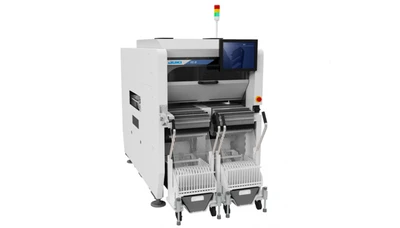
An SMT (Surface Mount Technology) machine is used in PCB assembly to place electronic components directly onto the board surface. It includes equipment such as pick-and-place machines, reflow ovens, and inspection systems.
Conformal coating is typically a post-SMT process, meaning:
Together, they ensure both functionality and durability.
Dip Conformal Coating Machines: How They Work
Dip coating involves immersing the entire PCB into a tank filled with liquid coating material, then withdrawing it at a controlled speed.
Key Advantages
Full coverage – Coats all surfaces, including under components
High throughput – Ideal for large-scale production
Process simplicity – Easy automation with minimal operator skill
Consistent results – Uniform coating across batches
Dip coating ensures complete penetration into complex geometries, making it highly reliable for protection.
Limitations
Less control over coating thickness
Potential material waste or pooling
Requires masking for sensitive areas
Best for:
High-volume, standardized PCB production with minimal selective coating needs
Spray Conformal Coating Machines: How They Work
Spray coating uses nozzles (pneumatic or ultrasonic) to atomize coating material into a fine mist and apply it precisely to the PCB.
Key Advantages
High precision – Coat only where needed
Material efficiency – Reduced waste compared to dipping
Flexible production – Suitable for low to medium volumes
Selective coating capability – Ideal for complex designs
Spray systems allow better control of coating thickness and pattern through adjustable parameters like pressure and nozzle distance.
Limitations
Requires masking and programming
Higher operator skill or automation setup
Slightly lower throughput vs dip systems
Best for:
Complex PCBs, high-value electronics, and applications requiring selective coating
Dip vs. Spray: Side-by-Side Comparison
| Factor | Dip Coating | Spray Coating |
| Coverage | Full immersion (100%) | Selective, controlled |
| Production Volume | High | Low–medium |
| Material Usage | Higher waste | More efficient |
| Thickness Control | Limited | Precise |
| Setup Complexity | Simple | More complex |
| Application Flexibility | Low | High |
In short:
How to Choose the Right PCB Conformal Coating Machine
When evaluating a pcb conformal coating machine, consider these 5 critical factors:
1. Production Volume
2. PCB Complexity
3. Coating Requirements
4. Cost Structure
5. Automation Level
Why Choose CY Industry
At CY Industry, we specialize in advanced conformal coating machine for sale solutions designed for modern electronics manufacturing. Our conformal coating equipment supports both dip and spray applications for different PCB coating requirements.
What Sets Us Apart:
Customizable dip & spray systems
High-precision control for consistent coating thickness
Seamless integration with SMT production lines
Reliable performance for automotive, medical, and industrial sectors
Global technical support and fast delivery
Whether you need a high-throughput dip system or a precision spray solution, CY Industry provides tailored equipment to match your exact application.
Conclusion
Choosing between dip and spray coating isn’t about which is “better”—it’s about what fits your production goals.
Choose dip coating for speed, simplicity, and full coverage
Choose spray coating for precision, flexibility, and efficiency
By aligning your coating method with your product design, volume, and quality requirements, you can significantly improve reliability while optimizing costs.
FAQs
1. What is the difference between dip and spray conformal coating?
Dip coating immerses the PCB for full coverage, while conformal coating spray equipment applies material selectively using nozzles for higher precision.
2. What is SMT machine and why is it important?
An SMT machine places components onto PCBs during assembly. Conformal coating follows SMT to protect the finished board.
3. Which conformal coating machine is best for high-volume production?
Dip coating machines are typically better for high-volume manufacturing due to their speed and simplicity.
4. Can spray coating replace dip coating?
In many cases yes—especially for complex PCBs—but it depends on your production scale and coating requirements.
5. Where can I find a reliable conformal coating machine for sale?
CY Industry offers professional, customizable solutions for both dip and spray coating systems—ideal for global manufacturers seeking performance and reliability.



 Call us on:
  Email Us:
  Building 2, Xingye 1st Road, Fenghuang Community, Fuyong Street, Bao 'an District, Shenzhen, Guangdong, China.