For EMS factories, SMT equipment distributors, and electronics manufacturers, choosing a reflow oven is a process decision, not only an equipment purchase. The oven must match solder paste type, PCB size, component density, product reliability level, target throughput, and the upstream and downstream equipment in the SMT production line.
A reliable reflow oven machine controls preheating, soaking, reflow, peak temperature, and cooling to form stable solder joints without overheating sensitive components. For consumer electronics, automotive control units, 5G modules, medical electronics, IoT devices, and industrial boards, the right oven type can reduce soldering defects and improve repeatability across batch production.
Why Reflow Oven Selection Matters for SMT Lines
The solder reflow oven sits after solder paste printing and pick and place. If temperature control is unstable, good printing and accurate placement can still result in cold joints, bridging, tombstoning, solder balls, oxidation, or excessive voiding. For lead-free soldering, the process window is usually narrower, so thermal profiling becomes more important.
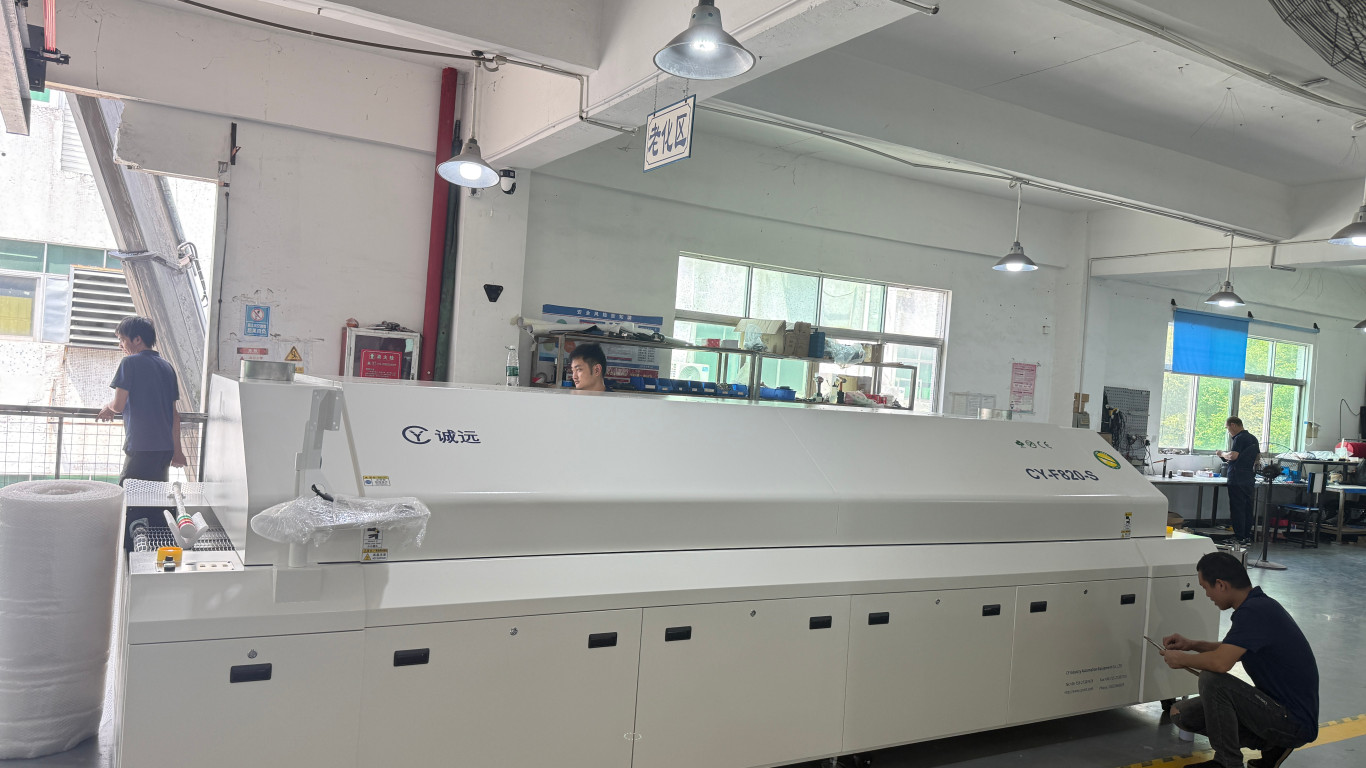
Buyers should evaluate the oven together with the full line. A compact line may only need a standard hot air model, while high-density PCB assembly may require more heating zones, better cooling control, nitrogen protection, or vacuum reflow. The final decision should be based on actual PCB size, solder paste, component packages, daily output, and reliability requirements.
Hot Air Reflow Oven for Standard Lead-Free SMT Production
A hot air reflow oven uses controlled convection to transfer heat evenly across the PCB. It is widely used for standard lead-free SMT assembly because it can support SAC305 and other lead-free solder pastes with stable thermal distribution. For many EMS factories, this is the most practical starting point when the product mix includes LED boards, consumer electronics, power supplies, industrial control boards, and general electronic devices. For applications requiring dedicated lead-free processing, a lead free hot air reflow oven can provide stable thermal distribution for different PCB assembly requirements.
CY Industry's hot air solder reflow machine range includes lead-free models, F series machines, N series machines, and dual-rail configurations. Practical parameters to check include heating zone count, conveyor width, conveyor speed, cooling design, temperature control range, and power consumption. For example, CY-P610 uses 6 upper and 6 lower heating zones, top and bottom cooling zones, a 50-350mm rail width range, 300-2000mm/min conveyor speed, and room temperature to 350°C control range.
Hot air reflow is usually suitable when boards do not have extreme voiding control requirements and the components can be soldered within a conventional lead-free thermal profile. It offers a balanced option for factories that need stable quality, manageable operation, and good compatibility with common SMT line layouts.
Nitrogen Reflow Oven for Oxidation Control and Fine-Pitch Components
A nitrogen reflow oven introduces a nitrogen atmosphere into the heating chamber to reduce oxidation during soldering. This is useful for fine-pitch ICs, BGAs, QFNs, micro-BGAs, dense assemblies, and high-reliability electronics where solder joint appearance and wetting quality matter.
Low-oxygen process environments, such as oxygen levels below 100ppm in nitrogen reflow applications, can help improve solder wetting and reduce oxidation on pads and component leads. This is especially relevant for automotive electronics, medical devices, communication equipment, and higher-value PCBA products where rework is expensive.
The main purchasing question is whether the product value and reliability demand justify nitrogen operating cost. When comparing the smt reflow oven price, buyers should also review nitrogen consumption, chamber sealing, oxygen monitoring, heat recovery, maintenance access, and production volume. A nitrogen model may not be necessary for every standard board, but it can be important for factories serving customers with stricter solder joint requirements.
Vacuum Reflow Oven for Low-Void Soldering Applications
A vacuum reflow oven is selected when void control is a key quality target. Vacuum reflow removes trapped gases during the soldering process and is commonly considered for BGA, QFN, power modules, EV-related electronics, aerospace electronics, medical products, and other mission-critical assemblies.
Vacuum technology can support very low voiding targets, especially when used with suitable solder paste, pad design, stencil design, and process profile. CY Industry's vacuum reflow solution is designed around lead-free compatibility, nitrogen support, and vacuum environments for applications that require stronger joint integrity.
Compared with standard hot air or nitrogen reflow, vacuum reflow usually requires closer process engineering. Buyers should confirm acceptable void rate, product category, inspection method, cycle time, board size, and component package. It is not always the highest-throughput choice, but it can be the right solution when solder voids directly affect thermal performance or field reliability.
| Reflow Oven Type | Best-Fit SMT Application | Main Buyer Focus |
|---|
| Hot air reflow oven | Standard lead-free SMT production and general PCB assembly | Heating zones, temperature uniformity, conveyor speed, energy use |
| Nitrogen reflow oven | Fine-pitch ICs, BGAs, QFNs, high-reliability electronics | Oxygen level, nitrogen consumption, wetting quality, oxidation control |
| Vacuum reflow oven | Power modules, BGA, QFN, EV, aerospace, medical electronics | Void reduction, vacuum level, cycle time, inspection requirement |
| Dual-rail reflow oven | High-volume SMT lines or mixed board flow | Rail width, line balance, throughput, product changeover |
Check Reflow Oven Machine Parameters Before Purchase
Before selecting a reflow oven machine, buyers should compare technical parameters against real production needs. Heating zone count affects thermal profile flexibility. Conveyor speed affects output and dwell time. PCB width determines whether the machine can handle current and future boards. Cooling design affects solder joint solidification and component stress.
CY-F820 series configurations cover 8, 10, or 12 upper and lower heating zones depending on the model, with cooling zones such as 2 upper and 2 lower or optional 3 upper and 3 lower. The series supports 300-2000mm/min conveyor speed, room temperature to 350°C temperature range, and PCB width options such as 400mm rail type or 550mm belt type. These parameters are useful for buyers comparing standard production, larger boards, or higher-capacity SMT lines.
Board data: PCB size, thickness, copper weight, component height, and thermal mass.
Process data: solder paste type, lead-free alloy, target peak temperature, cooling rate, and acceptable defects.
Line data: conveyor direction, rail height, upstream printer output, pick and place speed, AOI position, and daily capacity target.
Match Reflow Oven Integration with Full SMT Line Layout
The oven should work smoothly with the solder paste printer, SPI, pick and place machine, PCB conveyor, AOI, loader, and unloader. If the oven is undersized, placement machines may wait. If it is oversized for the actual output, energy use and floor space may not be efficient.
For EMS factories serving different customers, recipe storage, temperature data, alarm records, and process traceability can be valuable. CY series features such as computer and PLC control, fault diagnosis, automatic alarm lists, and data report backup help support production management and quality records. These functions are practical for factories that need repeatable profiles across different products and customer audits.
Conclusion
Choosing the right reflow oven means matching hot air, nitrogen, or vacuum reflow with PCB design, soldering defects to control, reliability level, and line capacity. For a practical SMT reflow oven recommendation, send CY Industry your PCB size, solder paste, component packages, target output, acceptable void rate, and planned SMT line layout.
FAQ
1. What is the main difference between hot air, nitrogen, and vacuum reflow ovens?
A hot air reflow oven uses convection heating for standard SMT soldering. A nitrogen reflow oven reduces oxidation by creating a low-oxygen process environment. A vacuum reflow oven helps remove trapped gases to reduce solder voids in high-reliability assemblies.
2. When should an EMS factory choose a nitrogen reflow oven?
An EMS factory should consider nitrogen reflow when producing fine-pitch ICs, BGAs, QFNs, communication boards, automotive electronics, medical devices, or other products where solder wetting, oxidation control, and joint appearance are important.
3. Is a vacuum reflow oven necessary for all SMT production?
No. Vacuum reflow is mainly needed when void reduction is a critical requirement. It is commonly used for power modules, BGAs, QFNs, EV electronics, aerospace electronics, and medical products where voids may affect thermal or electrical reliability.
4. How many heating zones should a reflow oven machine have?
The required heating zone count depends on board complexity, solder paste type, component thermal mass, and production speed. More zones provide better profile flexibility, especially for dense, large, or high-reliability PCB assemblies.
5. What information should buyers provide before selecting a reflow oven?
Buyers should provide PCB size, board thickness, solder paste alloy, component package types, target output, acceptable defect level, preferred conveyor direction, available workshop space, and whether nitrogen or vacuum control is required.
6. How does a reflow oven connect with the full SMT production line?
The reflow oven is normally placed after solder paste printing, SPI, and pick and place, and before AOI inspection. It should match upstream placement output, conveyor height, line direction, rail width, and downstream inspection requirements.



 Call us on:
  Email Us:
  Building 2, Xingye 1st Road, Fenghuang Community, Fuyong Street, Bao 'an District, Shenzhen, Guangdong, China.