If you're involved in setting up or optimizing an SMT line factory, you've undoubtedly encountered two terms for the core assembly equipment: pick and place machine smd and chip mounter. This often leads to a common question: are they different machines, or is there a distinction I need to know for my SMT machine for pcb assembly?
The short answer is: in today's manufacturing landscape, there is no fundamental technical difference. The terms are largely interchangeable, with usage influenced by regional preference and historical context.
This article, brought to you by CY Industry, will clear up the confusion by exploring the subtle nuances behind these names and explaining what you should really be focusing on when choosing this critical SMT machine for pcb assembly.
The Core Function: What Do These Machines Do?
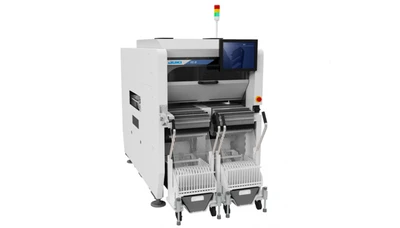
Whether you call it a pick and place machine smd or a chip mounter, its primary function remains the same: to automatically retrieve surface-mount devices (SMDs) from feeders and place them with high speed and precision onto the solder-paste-coated pads of a PCB.
This machine is the workhorse of any modern SMT line factory, responsible for the assembly in SMT assembly. Its performance directly determines the throughput, flexibility, and quality of your entire production line. A qualified pick and place machine china supplier should help buyers match placement capacity to the complete SMT line.
Breaking Down the Terminology
So, why two different names for the same piece of equipment? The distinction lies more in language and evolution than in technical specification.
1. Chip Mounter (or Chip Shooter)
Origin & Focus: This term originated earlier in the industry and is still very common, particularly in Asia. The word chip historically refers to small, passive components like resistors and capacitors.
Implied Function: A mounter implies the action of placing a component onto the board. The related term "chip shooter" specifically denotes a very high-speed machine optimized for placing these small, standard chips at blistering speeds, often exceeding 50,000 components per hour (CPH).
Regional Usage: You will frequently hear this term in factories and from manufacturers with strong ties to Japan, Korea, and China.
2. Pick and Place Machine (SMD)
Origin & Focus: This is a more descriptive, process-oriented term that has become the global standard. It breaks down the machine's operation into two clear steps: Picking a component from a feeder, and Placing it on the board.
Implied Function: This term is more encompassing. It covers the entire range of components, from the tiniest 0201 resistor to large, fine-pitch components like BGAs, QFPs, and connectors. A pick and place machine SMD can be a high-speed shooter, a flexible placer for large components, or a hybrid machine that does both.
Global Usage: Pick and Place is widely understood and used across North America, Europe, and in international technical documentation.
What Truly Matters When Choosing Your SMT Machine for PCB Assembly
Instead of focusing on the name, a savvy SMT line factory manager should evaluate the machine based on its technical capabilities and how they align with production needs. The key differentiators are not in the title but in the specs.
| Feature | Why It Matters for Your SMT Line Factory |
|---|
| Placement Speed (CPH) | Determines your overall line throughput. Is it optimized for speed (chip shooting) or a balanced mix? |
| Placement Accuracy | Critical for fine-pitch components like BGAs and micro-BGAs. Measured in microns, higher accuracy is needed for advanced electronics. |
| Component Range | Can the machine handle everything you need, from the smallest 01005 chips to large connectors and odd-form components? |
| Feeder Capacity & Type | Defines the machine's flexibility for high-mix production. How many feeders can it hold, and are they motorized or mechanical? |
| Vision Systems | Essential for accuracy. Does it have a high-resolution upward-looking camera for component alignment and a downward-looking camera for board fiducials? |
Conclusion: Look Beyond the Name
In practice, asking for a pick and place machine smd or a chip mounter will lead you to the same category of equipment—the central SMT machine for pcb assembly. The most advanced machines today are simply called SMT Placement Systems, as they integrate the capabilities of both high-speed chip shooting and high-precision placement.
When planning your SMT line factory, shift your focus from semantics to specifications. Understand your product mix, required throughput, and the smallest component you need to place.
CY Industry provides expert guidance and robust SMT placement solutions that balance speed, accuracy, and flexibility. Contact us today to find the perfect placement system for your specific assembly needs, regardless of what you call it.


 Call us on:
  Email Us:
  Building 2, Xingye 1st Road, Fenghuang Community, Fuyong Street, Bao 'an District, Shenzhen, Guangdong, China.